
deck and fence staining
Deck & Fence Staining in Sarasota, FL
Wood decks and fences take a beating from Florida's sun and rain. We clean, brighten, and stain or seal your wood to restore its color and protect it from moisture, UV, and graying.
Free on-site visit · Detailed written quote · No obligation.

What's Included
Our Deck & Fence Staining covers
Deck cleaning & staining
Fence staining & sealing
Wood brightening & prep
Sealer & protective coats
Our Process
How we do it
Clean & brighten
Wood is cleaned and brightened to remove gray, mildew, and old coating.
Prep & sand
Rough areas are sanded and the surface is prepped for even absorption.
Stain or seal
Stain or sealer is applied for color and UV/moisture protection.
Review
Coverage is checked and the area is cleaned up.
Why Ryler ProMax
Done once, done right
- Restores color & protects wood
- UV- and moisture-resistant sealers
- Extends the life of decks & fences
- Boosts backyard curb appeal
- Labelled touch-up paint left with you
Worth knowing
Why Florida wood fails, and what actually stops it
A deck or fence on the Gulf Coast is fighting three things at once: UV that breaks down the surface fibres, humidity that keeps the wood moving, and salt that accelerates both. Most re-stains fail early because they treat only the last coat.
Strip before you stain
A failing coat has to come off, not be sealed under a new one. Anything applied over a lifting film takes the old failure with it and peels on the same schedule.
Let it dry properly
Wood cleaned or pressure-washed holds water for days. Staining a damp board traps moisture behind the finish, which is what causes the blotching people blame on the product.
Penetrating, not film-forming
On horizontal surfaces that take sun and foot traffic, a stain that soaks in wears evenly. A film sits on top, and when it goes it goes in sheets.
Plan the reapplication
Nothing lasts indefinitely in this climate. A deck that is maintained on a schedule stays a maintenance job; a deck left too long becomes a replacement.
Project in three stages
A gate that was written off
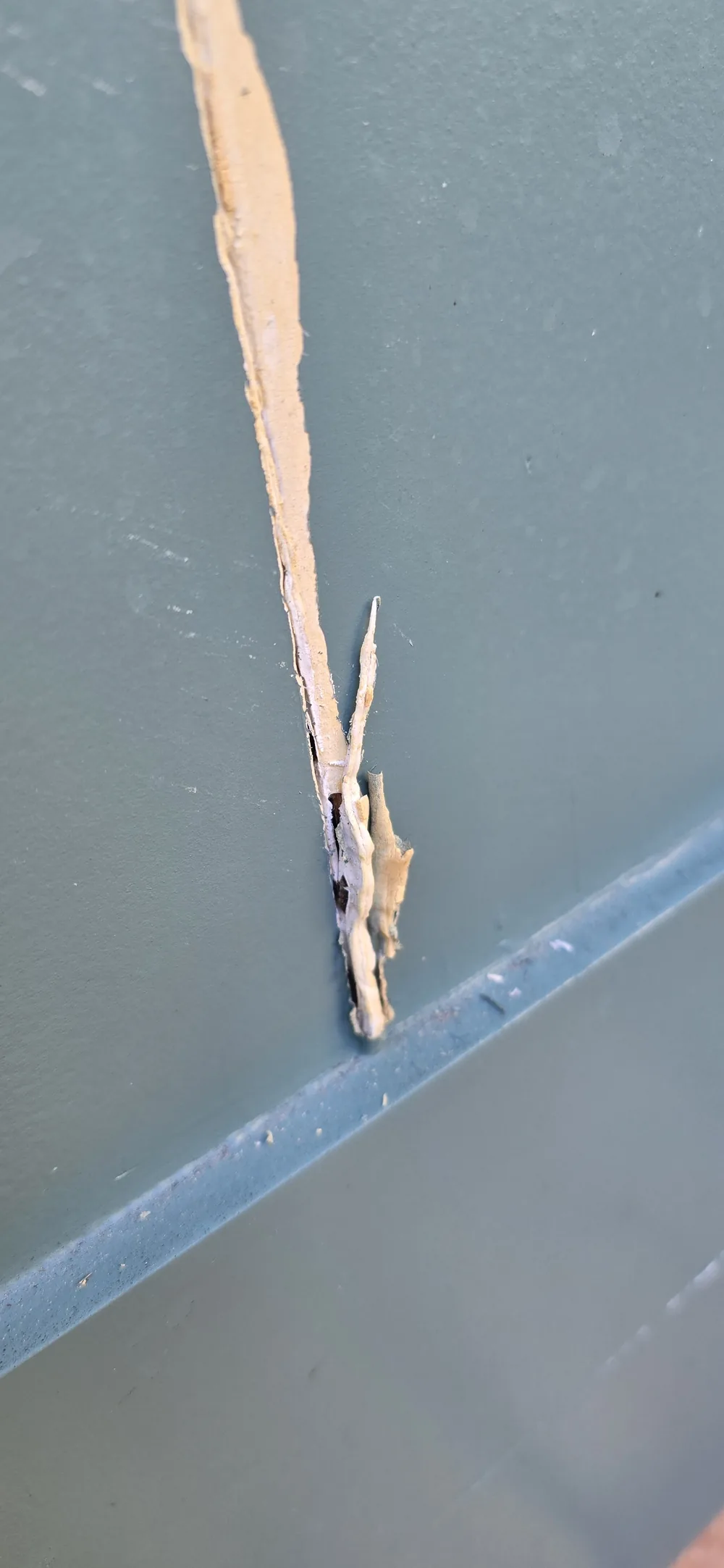
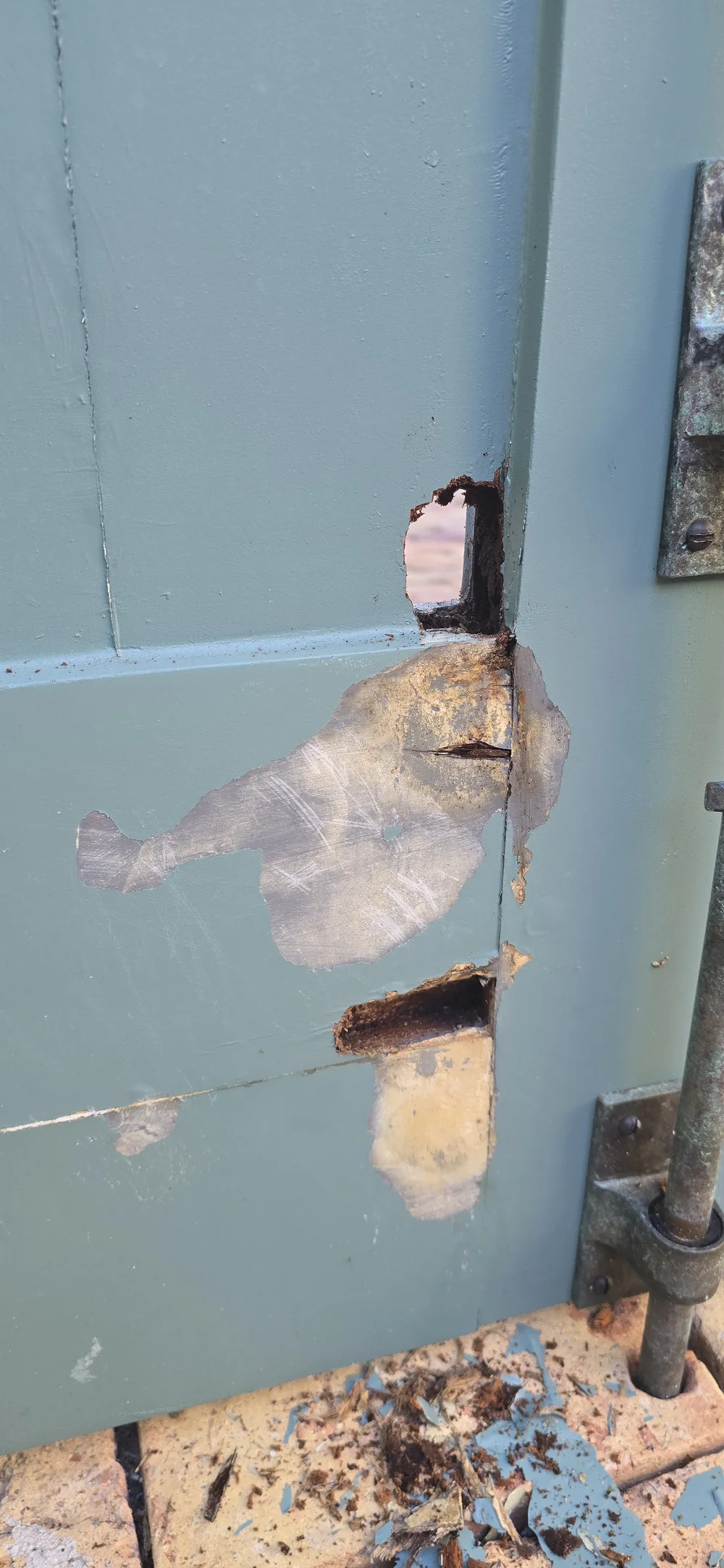
Florida sun opens the grain, then the rain gets in. By the time a gate looks like the first frame, most quotes say replace. These three photographs were taken across three days on the same gate — and the middle one is where the money actually goes.
-
Stage 01
What we found
Timber split along the grain, the old finish lifting away in sheets. Coating over this traps the moisture already in the wood and buys a season at most.
-
Stage 02
Cut out and rebuilt
Rot cut back to sound wood, the voids rebuilt with epoxy filler and sanded flush. This stage is invisible in the finished photo, and it is the only reason the finish lasts.
-
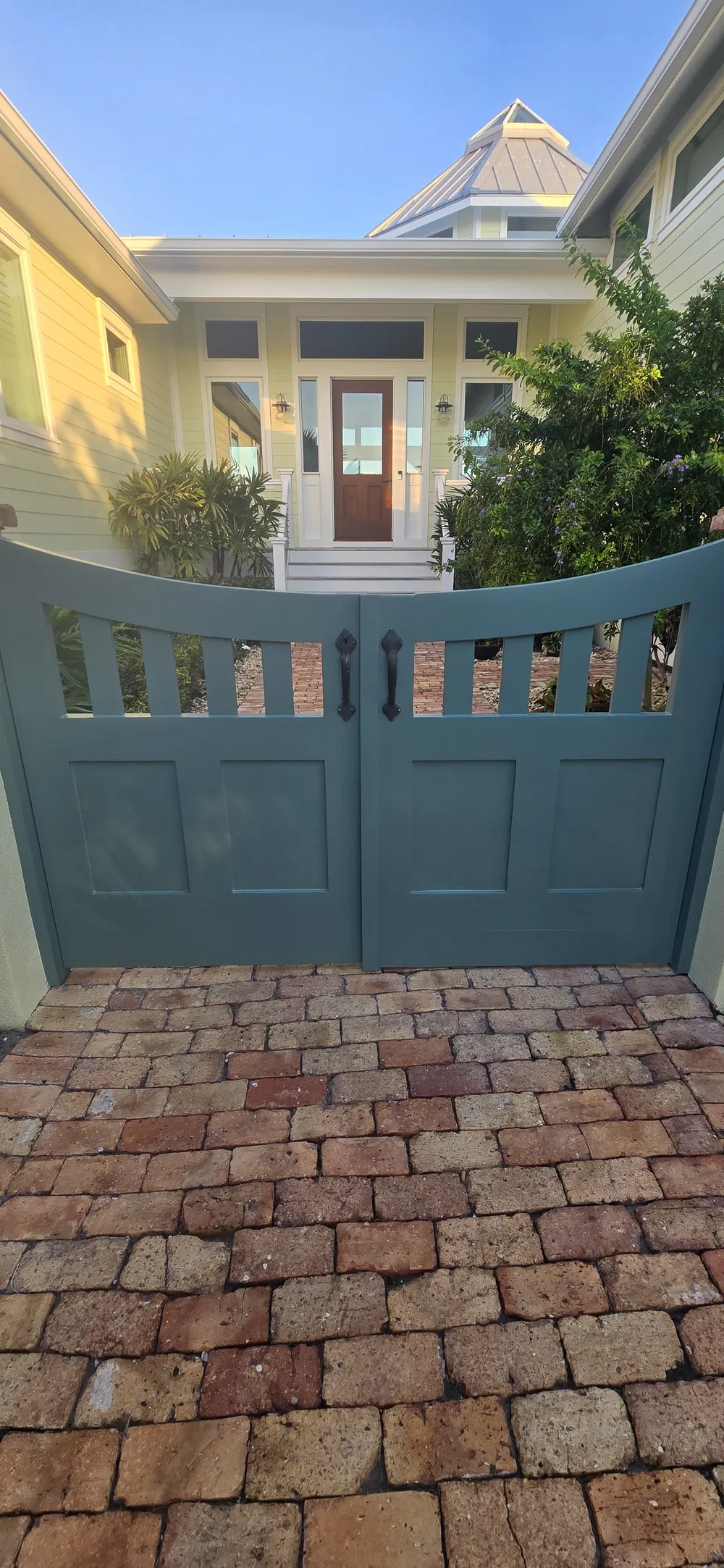
Stage 03
Hung and finished
Primed, then finished in teal to carry the house's palette out to the street. Same gate, same hinges — no replacement, no new hardware.
Our Work
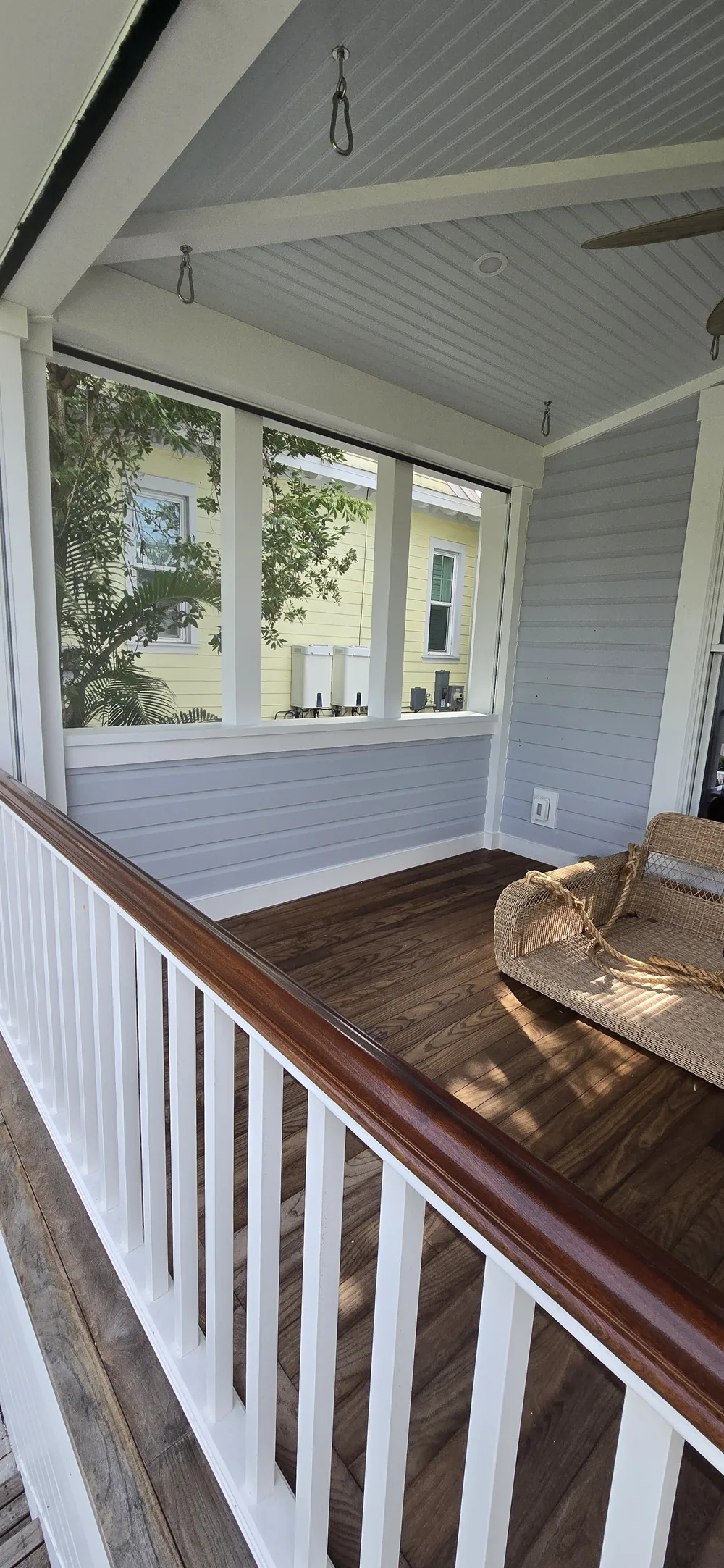
Selected deck & fence staining work
Click any photo to see the finish up close.
Walkthroughs
See the finish move
A still photograph flatters a finish; a slow pass across it does not. Every clip below is silent, and nothing downloads until you press play.
-
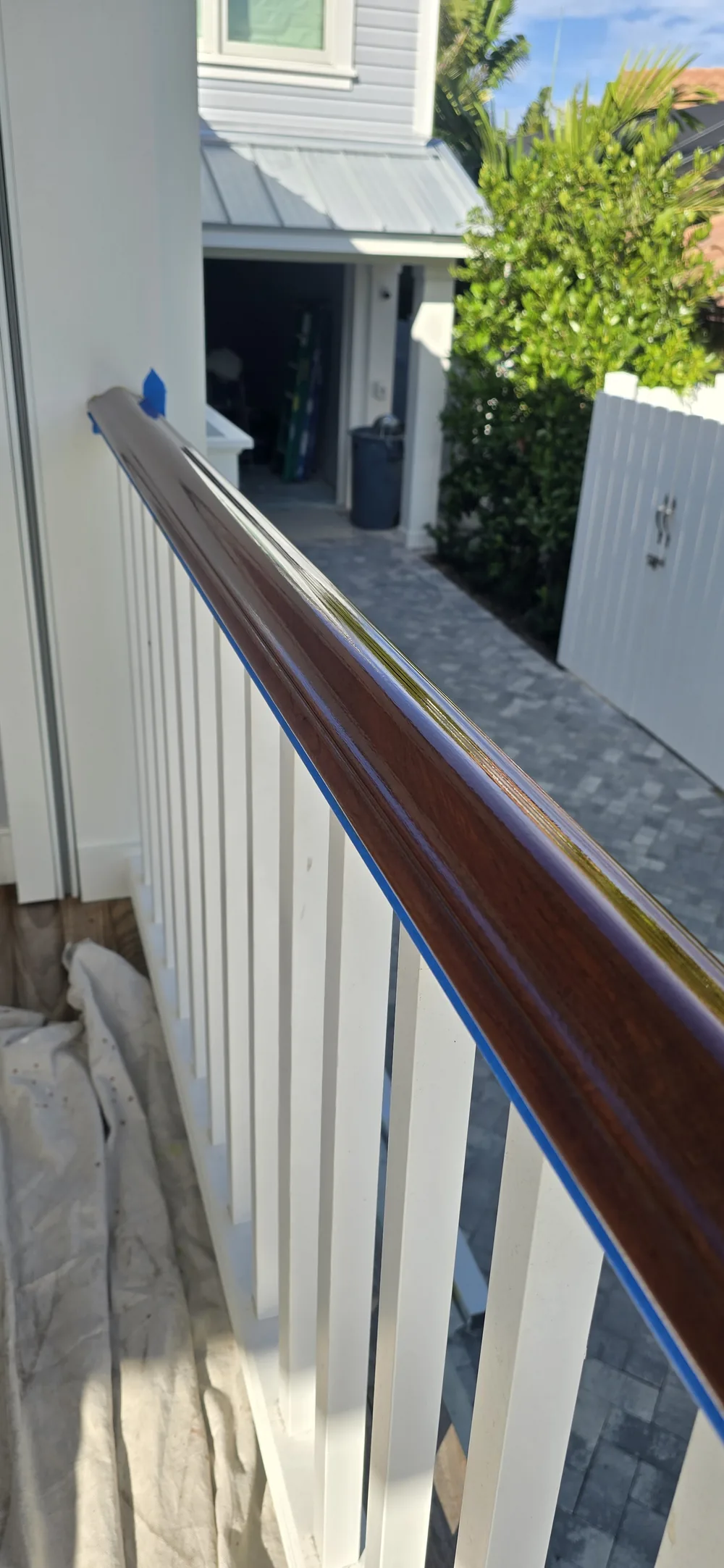
Exterior handrail stained in mahogany
An exterior stair handrail finished in a warm mahogany stain over a white-painted balustrade — outdoor wood carrying a stain finish through Florida sun and rain.
-
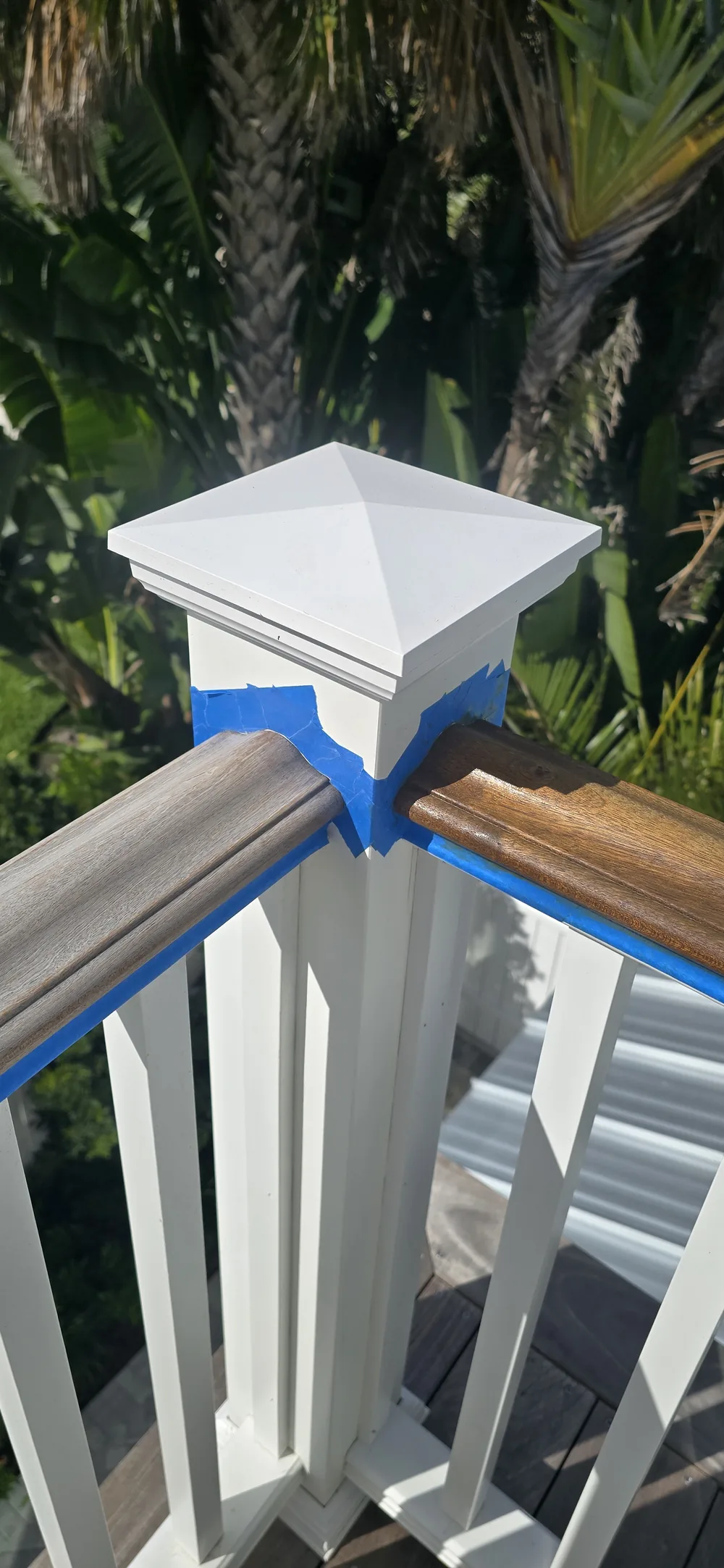
Deck handrail taking stain
A deck handrail carrying a fresh coat of mahogany stain over hand-painted white balusters, masked at the joint so the two finishes meet clean.
-
Gate timber filled and sanded
A split running the full height of a gate panel, filled and sanded flush before any colour goes on — the stage that decides whether the finish lasts a season or a decade.
-
Finished gate, hinge to handle
The rebuilt gate hung and finished in teal, strap hinges and thumb latch back in place over a brick paver drive.
-
Pelican fence panels, first colour
Cut-out pelican picket panels standing on drop cloths in the shop, carrying their first coat before the final white goes on.
-
Pelican fence, finished white
The same pelican picket fence finished in soft white — sprayed off site so every edge and cut-out is coated evenly before it is set.
Common Questions
Deck & Fence Staining FAQs
How often should a deck be re-stained in Florida?
In Florida's climate, decks typically benefit from re-staining or sealing every 1–3 years depending on sun exposure and foot traffic.
Can you restore a gray, weathered deck?
Yes — cleaning and brightening removes gray and mildew before we stain, bringing back the wood's color.
Stain or seal — which is better?
It depends on the wood and the look you want; we'll recommend a tinted stain for color and UV protection or a clear sealer to preserve a natural look.
Where We Work
Deck & Fence Staining across Sarasota & Manatee County
Related Services
You might also need
Exterior Painting
Florida's sun, salt air, and humidity are hard on exterior finishes — and on the stucco underneath them.
Learn more →Interior Painting
A premium interior paint job starts long before the first coat.
Learn more →Color Consultation
Choosing color is the hardest part of any project.
Learn more →Ready for deck & fence staining?
Get a free, no-pressure estimate. We'll visit your home, assess the scope, and walk you through exactly what we'd do and why.