The Downside of Painting Kitchen Cabinets, From People Who Do It
Where painted cabinets genuinely underperform, which doors are not worth coating, and the point at which replacing is the honest recommendation.
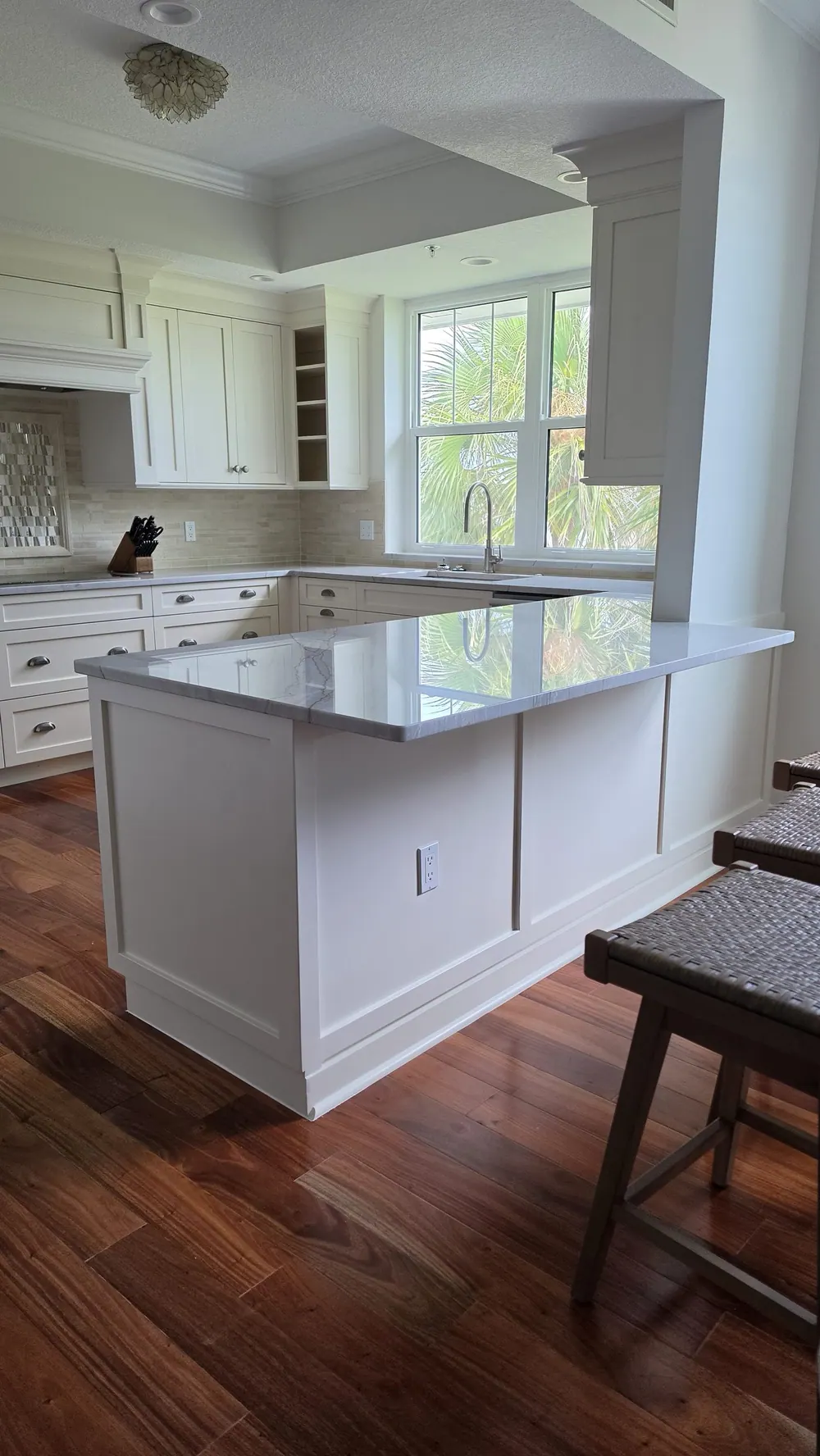
Most companies that paint cabinets will tell you it is always the right call. We do a lot of this work, on Gulf-front kitchens from Nokomis out to Longboat, and it is not always the right call.
Here is the version we would give a friend.
What painting a cabinet actually is
A factory finish is applied to a raw door in a controlled booth, cured with heat, and in many cases baked into the substrate. It is part of the door.
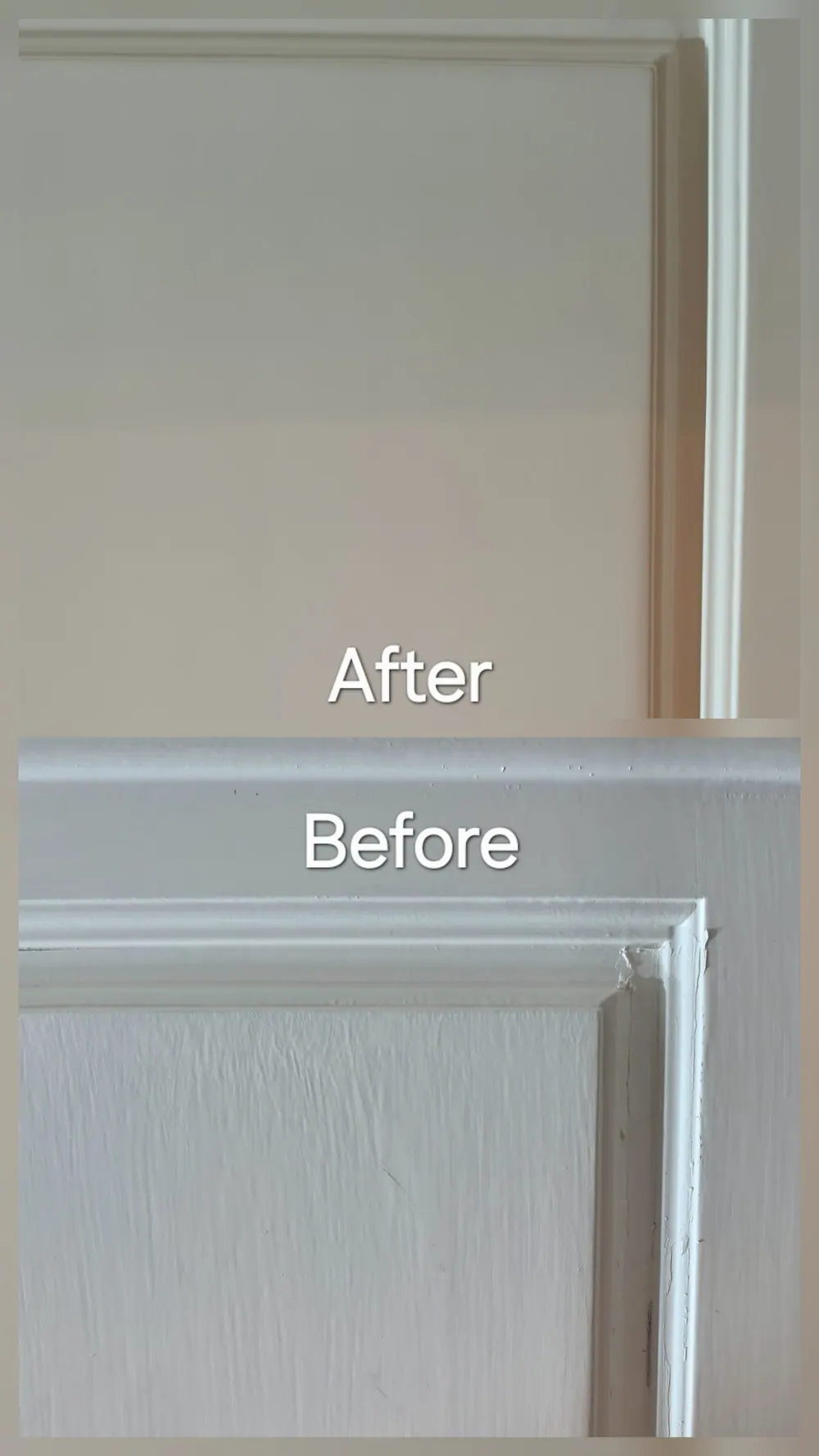
Everything done afterwards, by anyone, is a coating applied on top of that. Done properly it is extremely good — sprayed, no brush texture, hard-wearing, and honestly nicer to look at than most builder-grade factory finishes on this coast. But it sits on the surface, and that has consequences worth knowing before you commit.
Downside one: it chips differently
A factory finish that takes a hard knock from a pan tends to dent. A coating that takes the same knock can chip, and a chip shows the substrate colour underneath.
This is manageable — chips touch up well, and we leave paint for exactly that. But if you are imagining a surface that behaves like laminate under a busy family kitchen, adjust the expectation now rather than in March.
The places it happens are predictable: the door under the sink that gets kneed shut, the two doors either side of the range, and the drawer bank where a hip catches the corner.
Downside two: the next colour change costs you the prep again
The prep is most of this job. Degreasing, sanding, priming — that is where the hours go, and it is what makes the finish stick.
Change your mind in three years and you do not get to skip it. You are back at the start, and this time coating over your own coating, which means the adhesion of the first one now matters for the second. It is entirely doable. It just is not a free change of mind, and people sometimes assume it will be.
Downside three: paint follows the door
This is the one that surprises people most.
A coating does not hide a bad door. It records it. A veneer that has lifted at the corner is still lifted, now in a different colour. A profile with a chewed edge is still chewed. Sprayed white is especially unforgiving, because white shows a shadow where a stain hid one.
Good prep fixes a great deal — filling, sanding, rebuilding an edge. But there is a line past which we are no longer preparing a door, we are manufacturing one, and at that point you should be buying a door instead.
The finish is only ever as good as what is under it. Anyone who tells you the coating will solve a door problem is selling you the coating.
When we say don’t
We turn this work down more often than people expect. The clear cases:
Water-swollen doors. Under a leaking sink, MDF drinks and swells from the inside. The damage is in the panel, not on it, and no surface prep reaches it. A coating over a swollen door looks fine for a season and then telegraphs the swelling right back through.
Thermofoil that is lifting. Once the foil separates at a corner it keeps going. Coating over it bonds to a layer that is itself letting go.
Boxes that are failing. If the carcasses are sagging, the shelves are bowed, or the hinges have pulled out and been rescrewed twice, the doors are not your problem.
A layout you already dislike. A beautiful finish on a kitchen that does not work is a beautiful finish on a kitchen that does not work. We have watched people spend on this and remodel eighteen months later.
There is also a middle path nobody mentions: where the boxes are sound and only the doors are tired, new doors onto existing boxes is frequently the right answer. It is not our work, and we will still tell you.
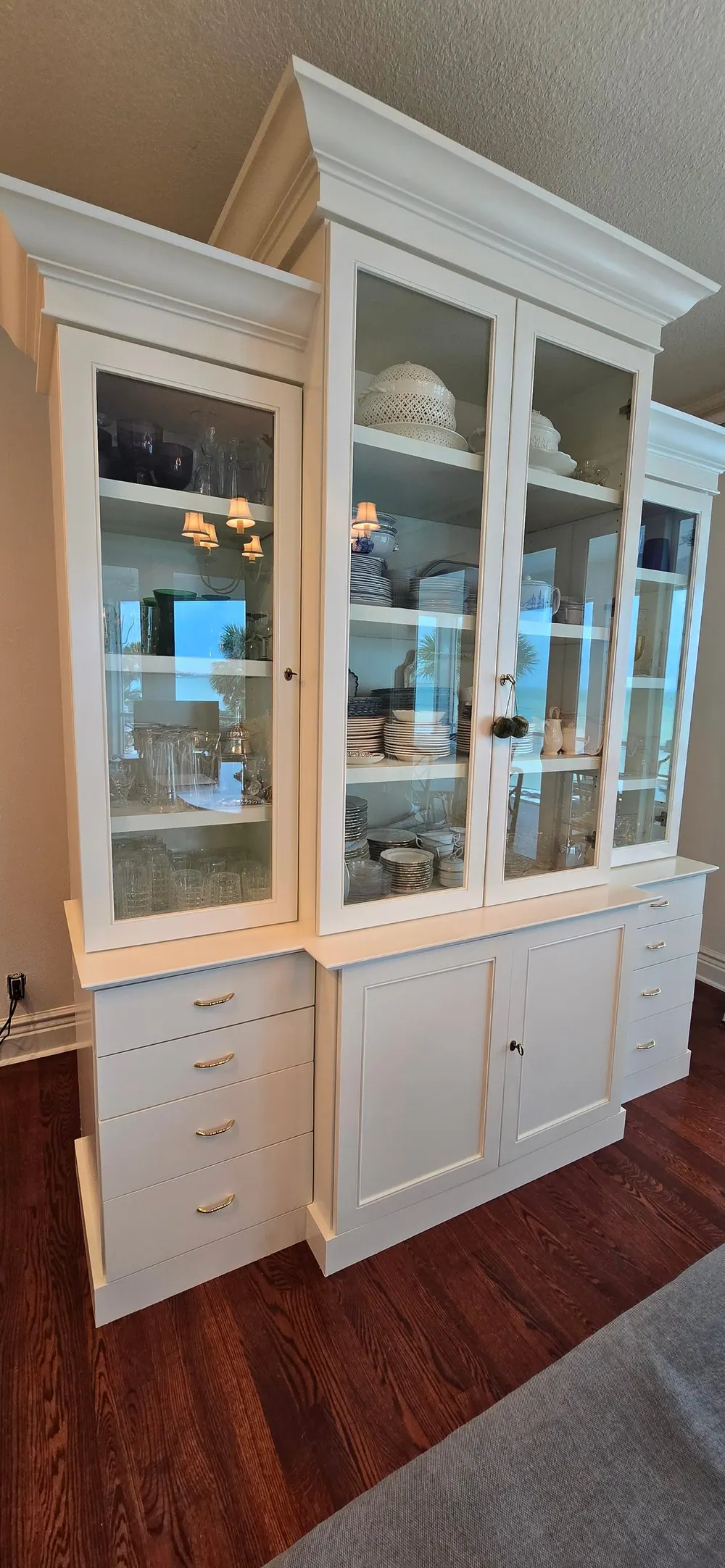
What the coast does to this specifically
Three things shorten a cabinet finish here, and none of them is the paint.
A house closed up for months. Between May and October a seasonal home on the Keys sits shut with the air barely running. Doors move with the humidity, and a finish applied over trapped moisture is under load from the day it cures.
Grease that was never really removed. Cooking film is invisible and it is everywhere near a range. Degreasing is unglamorous, adds no visible quality on handover day, and is the single most common thing skipped. A coating over grease is a coating over a release agent.
Dishwasher steam. A dishwasher that vents straight at a run of doors puts hot moisture into the same six inches of finish several times a week. If your last finish failed in one place and that place is beside the dishwasher, that was why.
Every callback we have ever looked at came down to one of those three.
The honest summary
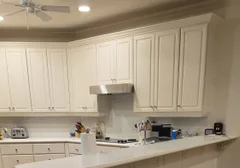
If your boxes are sound, your doors are solid, and you like your kitchen — refinishing is excellent, and it is genuinely nicer than most of what it replaces.
If any of those three is not true, a finish is the wrong tool, and we would rather say so at the estimate than be the company that took the work and let you find out in April.
That is the whole difference. Not the spray gun. The willingness to say no.
From the same trades
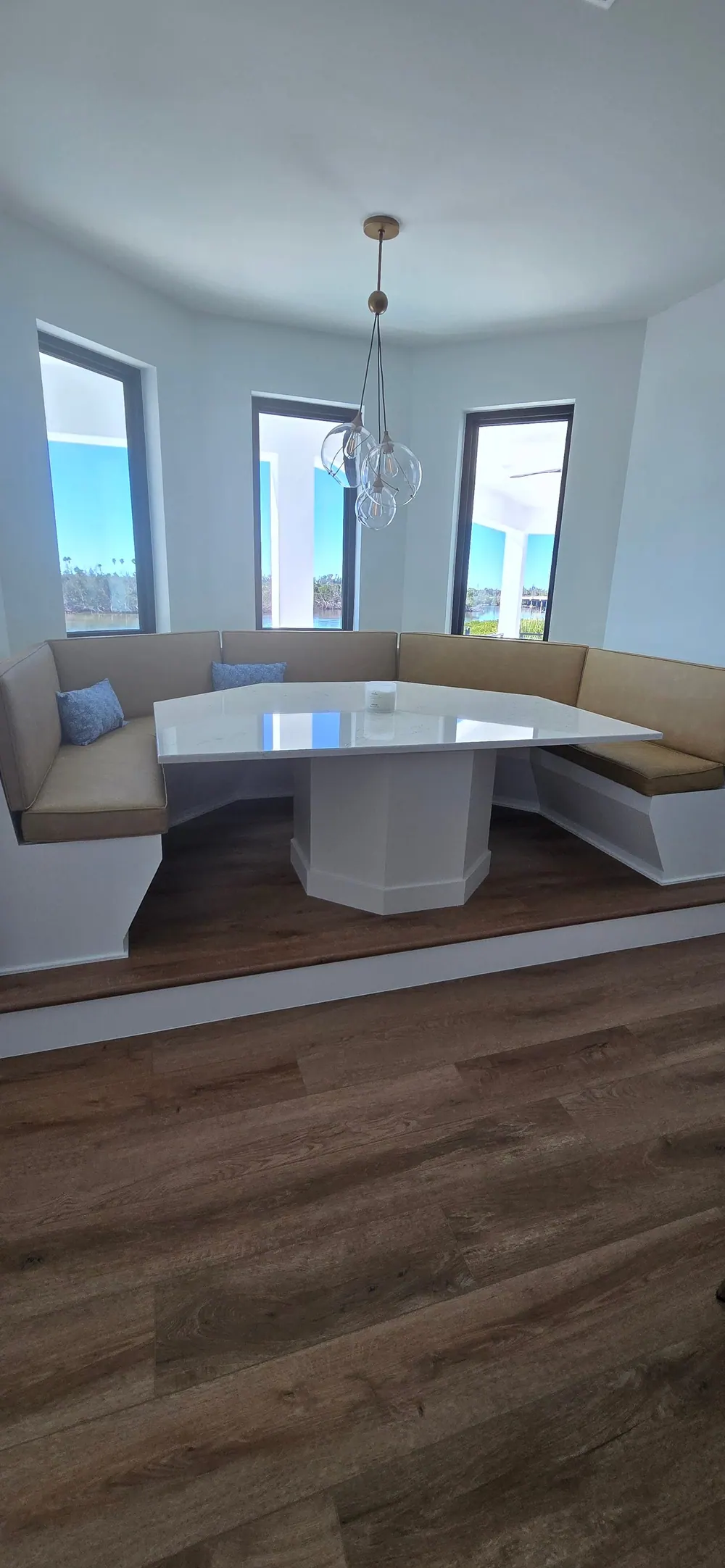
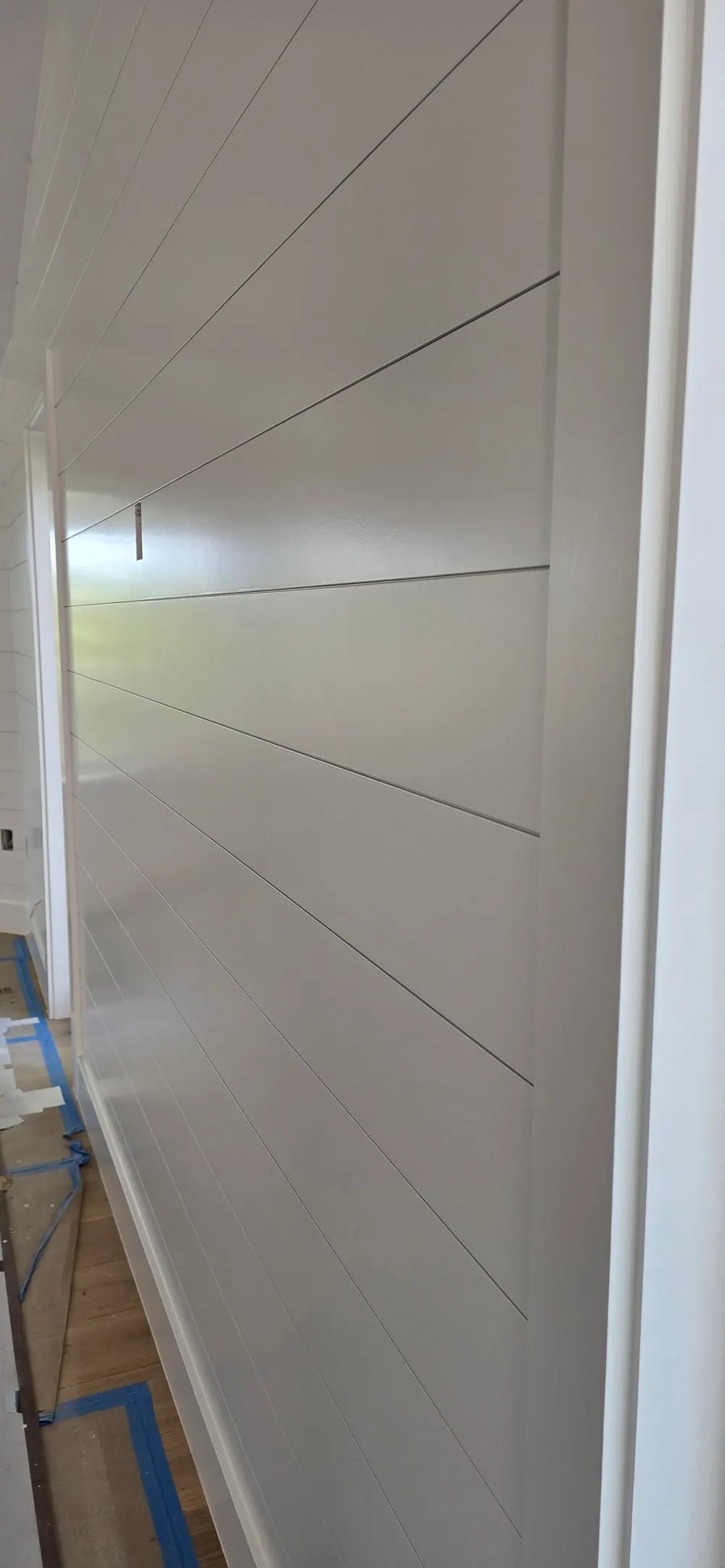
Questions we get asked
What is the downside to painting kitchen cabinets?
Three real ones. A painted finish is a coating on top of a door rather than part of it, so a hard knock chips it in a way a factory finish resists. Any future colour change means starting the prep over. And the result is only as good as the doors underneath — paint follows every existing flaw rather than hiding it. None of these are dealbreakers on sound cabinetry, but you should hear them before you commit.
Which kitchen cabinets are not worth painting?
Doors with swollen or delaminating edges from water, thermofoil that is lifting at the corners, and anything where the boxes themselves are failing. On a swollen door the damage is inside the panel and no amount of surface prep reaches it. Where the boxes are sound and only the doors are gone, replacing doors onto existing boxes is usually the better answer than either painting or a full replacement.
Can you paint over already painted or stained cabinets?
Yes to both, with different work in front of it. Previously painted cabinets need the old coating assessed for adhesion first — coating over a finish that is already letting go simply moves the failure up a layer. Stained and sealed doors need thorough degreasing and a bonding primer, because the sealer is designed to stop things from sticking to it.
How long does a painted cabinet finish last in Florida?
On sound doors, properly degreased and sprayed, a well-made finish holds for many years. What shortens it here is specific: humidity swings in a house that is closed up for months, cooking grease that is never fully removed before recoating, and steam from a dishwasher vented straight at a run of doors. The failures we are called back to look at are almost always one of those three, not the coating itself.
Is painting cabinets cheaper than replacing them?
It is a smaller job, but the honest framing is not cost — it is whether the cabinetry deserves it. Sound boxes and solid doors in a layout that works are worth refinishing. Failing boxes, a layout you dislike, or doors that are already coming apart are not made better by a finish, however good it is. We would rather tell you that at the estimate than after.